About
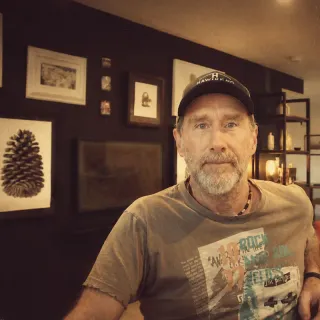
Andrew Farran.
The rest of this site says “we”, because that is the convention when a studio talks about its work. In this case, it is slightly misleading.
There is no team behind Fallow & Blade Studio. It is me.
I am a web designer based in St Lucia, Brisbane. I founded Fallow & Blade Studio in 2026, after twenty years working in technology and design. I do the research, design, development, and ongoing support myself, so the person you speak to at the beginning of a project is the person who will be doing the work.
Before this
Twenty yearsI started in multimedia design at university. After that, I moved into financial services and technology, where I spent twenty years working on systems used in banking and trading.
I built management information tools and worked with the IT teams who ran the trading systems. I led the design of system functionality and controls, and managed outages.
It was a useful environment in which to learn about technology and the people who depend on it. When something is unclear, slow, or poorly controlled, the problem tends to become apparent very quickly. You learn to pay attention to how a system is used, where it can fail, and what needs to happen when it does.
That experience is relevant to the way I approach websites. The problems are different, but for the people using them they can be just as consequential. I care about clarity, reliability, performance, and what happens when someone actually has to use the thing.
The studio is new. The experience behind it is not.
What I believe
PrinciplesA website is a trust document.
A website is often the first substantial encounter someone has with a business or professional. Before they make contact, they are making judgements about whether the organisation seems credible, competent, and worth their time.
There is good research behind the importance of visual presentation. In one study of 2,684 people evaluating website credibility, visual design appeared in over 46 per cent of their comments, making it the largest single category. That study does not tell us whether those impressions turned into enquiries, and I do not think it should be made to say that. It does, however, provide useful evidence for something that is easy to underestimate: the way a business presents itself affects how people perceive it.
Speed is a design constraint.
I think performance belongs in the decisions made from the beginning, rather than being measured after the design is finished and then repaired.
The familiar “four-second rule” for page loads is not established by the research I hold. What the research does show is that a simple sign that something is happening makes people willing to wait longer.
I build static sites with a practical target of loading in under a second on a normal connection. That is possible because the architecture is deliberately simple. There is no application server generating pages on demand and no database sitting between the visitor and the information they came to see.
Simplicity is harder than complexity.
It is easy to add another section, another feature, or another interaction. The harder question is whether it needs to be there at all.
A good website should make clear what the business does, why someone should trust it, and what they can do next. Working out exactly how to do that is often more difficult than adding things to the page.
That is one reason the studio starts with research rather than design.
Security is part of the construction.
A static website removes a lot of the machinery that creates security and maintenance problems in more complicated systems, and the source is kept in version control so there is always a clean copy from which to rebuild.
Every site is served over HTTPS with appropriate security settings. These are simply part of building the site properly, not additional features.
A site is worth looking after.
A website is working infrastructure. It represents the business every day, whether anyone is thinking about it or not.
I offer ongoing care for clients who want it, but I do not think every site needs a large maintenance arrangement simply to remain online. One of the advantages of a static site is that it can continue to work without me.
The site remains yours whether you take the care plan or not. Your site is hosted on your own Cloudflare account. The source code is kept in my GitHub account, and I will transfer it to you if you ask.
Why there are no client quotes
Established 2026There are no testimonials on this site because the studio started in 2026 and I have not asked clients to provide them yet.
I would rather say that plainly than fill the page with borrowed credibility.
When clients are ready to say something publicly, their words can go here. Until then, there will be no invented testimonials, anonymous praise, or unexplained logo wall.
There will not be a stock photograph of a team that does not exist, either.
Honest about fit
Who it is forI work particularly well with professional services firms, academics, and other professionals who need a serious personal or business website. Specialist trades are a good fit too, especially where the site needs to establish credibility quickly and make it easy for someone to enquire.
I am probably not the right choice if you need the cheapest possible website, or if your project requires a large team working across multiple disciplines. There are studios better suited to those jobs.
If the fit is wrong, I would rather tell you that at the beginning.
How to reach me
One business dayThe easiest way to reach me is by email. I will normally reply within one business day.
- [email protected]
- Phone
- +61 493 106 090
- Studio
- Macquarie St, St Lucia QLD 4067
- ABN
- 23 291 182 767
I carry professional indemnity and public liability insurance. If your organisation needs a certificate of currency before raising a purchase order, ask and I will send it.